Why hotel feasibility studies matter before investing
Hotel feasibility studies are designed to answer a simple but critical question: can a hotel investment truly generate income, or is it likely to become an expensive mistake?
In the hotel industry, many projects begin with what seems like a strong intuition: a good location, an attractive building, a growing tourist destination, a purchase price that appears reasonable, or the opportunity to convert a property into a hospitality asset.
However, in the hotel business, intuition is not enough.
A hotel is not just a real estate asset. It is a complex operating business, with variable revenue, significant fixed costs, seasonality, staffing requirements, online distribution, reputation, pricing, recurring capital expenditure and a strong dependence on management quality.
For this reason, before acquiring, developing, renovating or converting a property, it is essential to verify whether the project is sustainable from a commercial, operational, real estate and financial perspective.
That is exactly what a hotel feasibility study is for: turning an investment idea into a measurable, prudent and verifiable assessment.
What hotel feasibility studies are
Hotel feasibility studies are technical and economic analyses aimed at assessing whether a hospitality project can work, and under what conditions.
They may be used for:
-
the acquisition of an existing hotel;
-
the conversion of a property into a hotel;
-
the renovation of an existing hospitality asset;
-
the repositioning of a hotel;
-
the opening of a new hospitality property;
-
the review of a hotel business plan;
-
the assessment of a lease, rental agreement or management contract;
-
the entry of an investor into a hotel transaction;
-
the turnaround of a distressed hotel;
-
the decision to hold, sell or enhance a hotel asset.
The purpose is not to produce a theoretical document. The purpose is to answer a practical question: is the project sustainable, profitable and consistent with the capital required?
The problem: many hotel investments start from the wrong number
One of the most common mistakes in hotel investments is starting from the value of the property rather than from the hotel’s ability to generate income.
A building may be beautiful, central or prestigious, but that does not automatically make it a good hotel investment.
Likewise, a hotel may have an interesting location but still be penalized by rooms that are too small, high labor costs, outdated systems, inefficient distribution, weak reputation or an unsustainable lease.
The right question is not only:
“How much is this property worth?”
The right question is:
“How much operating income can this hotel generate after the required investment and under realistic management assumptions?”
Hotel feasibility studies shift the focus from the apparent attractiveness of the asset to its actual ability to create value.
The questions a hotel feasibility study should answer
A strong feasibility study should answer several essential questions.
| Area of analysis | Key question |
|---|---|
| Market | Is there enough demand to support the project? |
| Destination | Is the location growing, stable or saturated? |
| Product | Is the proposed hotel aligned with its target market? |
| Competitors | Which properties truly compete with the project? |
| Revenue | Are projected occupancy, ADR and RevPAR realistic? |
| Costs | Are labor, utilities, maintenance and distribution costs sustainable? |
| Capex | How much capital is truly required to make the asset competitive? |
| Management | Who will operate the hotel and under which operating model? |
| Finance | Can the project support debt, rent, expected returns and payback timing? |
| Risk | What happens if revenue is lower or costs are higher than expected? |
The quality of the study depends on its ability to connect all these elements into one coherent economic assessment.
A hotel may generate strong revenue but have excessive costs. It may have an attractive purchase price but require too much capital expenditure. It may have a good location but the wrong product. It may be sustainable for an operator but not for a real estate investor.
The main components of a hotel feasibility study
1. Destination analysis
The first step is the analysis of the destination.
It is not enough to say that a city is attractive or that a location has potential. The study must analyze the quality of demand, seasonality, business and leisure flows, events, accessibility, infrastructure, transportation links, cultural drivers and growth prospects.
A destination may generate a high number of arrivals but concentrate demand in only a few months. Or it may have healthy tourist flows but average rates that are too low to support a major investment.
The study must therefore assess not only whether demand exists, but whether that demand can generate revenue consistent with the project.
2. Market and competitive analysis
The competitive set is one of the most important parts of the study.
Competitors are not always the hotels located nearby. The real competitors are the properties targeting the same guests, with similar pricing, services, category, reputation and positioning.
The analysis should consider:
-
published rates;
-
estimated occupancy;
-
online reputation;
-
positioning on booking platforms;
-
quality of the official website;
-
brand presence;
-
services offered;
-
strengths and weaknesses;
-
level of renovation;
-
commercial and distribution capabilities.
This phase helps determine whether the project can enter the market with a competitive advantage or whether it risks being positioned in an already crowded segment.
3. Hotel product analysis
A common mistake is designing the hotel around the building rather than around demand.
The product must be built around the market: number of rooms, room size, category, services, food and beverage, meeting rooms, common areas, technology, wellness, parking, concept, design and operating model must all be consistent with the target audience.
A hotel can fail economically not because there is no demand, but because the product is wrong.
For example, a hotel with rooms that are too small for the upper-upscale segment, an oversized restaurant, poorly designed common areas or high technical operating costs may become fragile even in a strong location.
4. Hotel business plan
The business plan is the quantitative core of the hotel feasibility study.
It should estimate, in a prudent and well-documented way:
-
average occupancy;
-
average daily rate;
-
RevPAR;
-
room revenue;
-
food and beverage revenue;
-
meeting, event or ancillary revenue;
-
labor costs;
-
energy costs;
-
maintenance costs;
-
OTA commissions and distribution costs;
-
marketing and sales expenses;
-
administrative costs;
-
insurance;
-
rent;
-
gross operating profit;
-
EBITDA;
-
cash flow;
-
initial and recurring capex;
-
financing needs;
-
investment payback period.
The biggest risk is building a business plan on overly optimistic assumptions. A few percentage points less in occupancy, a lower average rate or higher labor costs can completely change the final outcome.
Practical example: why feasibility can change the view on a hotel
Imagine an investor evaluating the acquisition and renovation of a 60-room hotel.
At first glance, the transaction looks attractive: good location, recognizable property, existing tourist demand and the opportunity to improve the product.
However, the feasibility study could show three very different scenarios.
| Scenario | Occupancy | ADR | Indicative annual room revenue | Assessment |
|---|---|---|---|---|
| Conservative | 58% | $105 | approx. $1.33 million | High risk |
| Base case | 66% | $118 | approx. $1.70 million | Sustainable only with controlled capex |
| Upside case | 72% | $130 | approx. $2.05 million | Attractive, but dependent on management execution |
The point is not to choose the most favorable scenario. The point is to understand which scenario is most likely and how sensitive the project is to changes in performance.
If the total investment is too high, even a decent operating scenario may not be enough. If the lease is too expensive, the hotel may trade well but generate limited value for the operator. If the debt burden is too heavy, a delay in the ramp-up phase may compromise financial stability.
This is the real value of hotel feasibility studies: they do not simply say whether a project looks attractive. They show whether the numbers actually work.
Hotel feasibility, hotel valuation and investment value
A feasibility study is closely connected to hotel valuation.
The value of a hotel does not depend only on location or square footage. It depends primarily on the property’s expected ability to generate income.
For this reason, anyone assessing a hotel investment should combine real estate valuation with an operational perspective.
The issue is not only how much it costs to acquire or renovate the property. The issue is how much operating margin the hotel can produce once stabilized.
From this perspective, indicators such as EBITDA, GOP, RevPAR, fixed costs, capex, sustainable rent, exit value and expected return become essential.
For additional insights on hotel management, distress, value, revenue management and hospitality development, see the hotel guides by Roberto Necci at www.robertonecci.it, which help frame the hotel as a business rather than simply as a property.
When a hotel feasibility study is needed
A feasibility study should be prepared before making any major decision.
It is particularly useful when evaluating:
-
the acquisition of a hotel;
-
the signing of a hotel lease;
-
the conversion of a property into a hospitality asset;
-
the renovation of an existing hotel;
-
the turnaround of a distressed property;
-
the entry of a financial investor;
-
the presentation of a project to a bank;
-
the choice between direct management, business lease, franchising or management contract;
-
the sale of a hotel asset;
-
participation in a distressed, auction or NPL-related transaction.
The best time to conduct the analysis is before capital is committed, not after.
Once the acquisition has been completed, works have started or the contract has been signed, the room for correction becomes limited. A preliminary study allows the investor to adjust the project, negotiate better terms, reduce risk or decide not to proceed.
The most common mistakes when there is no feasibility study
The lack of preliminary analysis often leads to recurring mistakes.
The first is overestimating revenue. Many business plans assume high occupancy and ambitious rates without considering ramp-up time, competition, seasonality and initial reputation.
The second is underestimating costs. Labor, energy, maintenance, OTA commissions, marketing, insurance and administrative expenses may weigh much more than expected.
The third is ignoring future capex. A hotel does not require investment only at opening. Rooms, systems, technology, furniture and common areas must remain competitive over time.
The fourth is confusing potential with profitability. A hotel may have potential, but if the entry price is too high or the operating model is weak, that potential remains theoretical.
The fifth is failing to properly assess the contract. Lease, management, franchising, guarantees, duration, termination rights, fixed rent, variable rent and investment obligations can radically change the sustainability of the transaction.
Hotel feasibility studies for property conversions
Property conversions into hotels require particular attention.
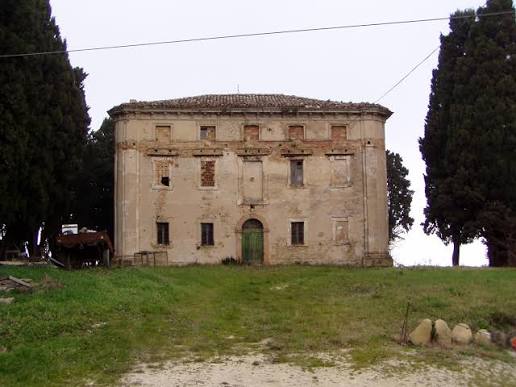
A historic building, office property, former clinic, convent, villa or standalone urban asset may appear suitable for hospitality conversion, but this is not always the case.
The study must verify:
-
permitted use;
-
zoning restrictions;
-
fire safety requirements;
-
accessibility;
-
internal layout;
-
ratio between gross area and sellable rooms;
-
technical system costs;
-
ability to create services consistent with the target market;
-
permitting timeline;
-
sustainability of the conversion cost.
The risk is investing significant capital in a product that, even after conversion, cannot generate an adequate return.
In these cases, the feasibility study must integrate hotel, technical, urban planning and financial expertise.
Why the study should include multiple scenarios
A serious study should not rely on a single outcome.
It is preferable to build at least three scenarios:
-
Conservative scenario, with lower revenue, higher costs and a longer ramp-up period.
-
Base case scenario, with realistic and sustainable assumptions.
-
Upside scenario, with stronger performance supported by concrete reasons.
Comparing scenarios helps determine whether the project is fragile or resilient.
If the transaction works only in the upside scenario, risk is high. If it remains sustainable even in the conservative scenario, the investment has a much stronger foundation.
The role of management in a hotel feasibility study
Another element that is often underestimated is management.
The same hotel can produce very different results depending on who operates it, the commercial model, cost control, revenue strategy, online reputation and ability to sell rooms at the right price.
For this reason, a feasibility study should not focus only on real estate numbers. It must also evaluate the operating model.
Direct management, business lease, management contract, franchising, white-label operation or partnership with a hotel group create different results and different risks.
A project that is sustainable for a property owner may not be sustainable for an operator. Conversely, a potentially attractive hotel may require a more structured operator in order to unlock its value.
How to recognize a well-prepared hotel feasibility study
A high-quality study should have several clear characteristics.
It should be independent, prudent, well documented and decision-oriented. It should not exist to confirm a decision that has already been made, but to test it.
A strong document should include:
-
destination analysis;
-
market analysis;
-
competitive set review;
-
product assessment;
-
positioning assumptions;
-
revenue projections;
-
cost projections;
-
investment requirements;
-
multi-year business plan;
-
alternative scenarios;
-
risk analysis;
-
operational recommendations;
-
final assessment of project sustainability.
Most importantly, it should be understandable for the people who need to make the decision: investors, banks, owners, developers or hotel operators.
Hotel feasibility studies and market intelligence
The hotel industry changes quickly. Interest rates, travel demand, labor costs, energy costs, contracts, distribution channels, property values and operating models all directly affect the attractiveness of an investment.
For this reason, project-specific studies should be supported by ongoing market intelligence.
The Investimenti Alberghieri blog features analysis, case studies, transactions and insights on hotels, hospitality assets, valuations, distress, development and investments.
Additional updates and news on the hotel sector and hospitality investments are also available on the InvestHotel blog, a useful resource for tracking industry dynamics and transactions.
Conclusion: a feasibility study protects capital
Hotel feasibility studies are not a formality. They are a capital protection tool.
They help determine whether a hotel project is sustainable, which conditions must be met, which risks need to be managed and which economic model can generate value.
A hotel investment may be attractive, but only at the right price. It may be sustainable, but only with the right level of capex. It may work, but only with the right management. It may create value, but only if the product is aligned with demand.
Feasibility analysis helps identify all of this before the investment is made.
For anyone acquiring, developing, converting or repositioning a hotel, the real question is not whether the transaction looks interesting.
The real question is: do the numbers prove that it can work?
If you are evaluating the acquisition, conversion, turnaround or development of a hotel asset, you can request a preliminary discussion with Hotel Management Group, the corporate platform of the ecosystem dedicated to hotel consulting, advisory, development and management.
A preliminary analysis can help verify the economic sustainability of the project, identify the main risks and build a more solid path before committing capital.
FAQ on hotel feasibility studies
What are hotel feasibility studies?
They are technical and economic analyses used to verify whether a hotel project, conversion or hospitality investment can be sustainable from a commercial, operational, real estate and financial perspective.
When is a hotel feasibility study needed?
It is needed before acquiring, opening, renovating, converting or repositioning a hotel. It is also useful before presenting a project to banks, investors or operating partners.
What is the difference between a business plan and a hotel feasibility study?
The business plan is one part of the feasibility study. A complete study also includes market analysis, destination analysis, competition, product, capex, risk assessment, alternative scenarios and operating model.
Why is a feasibility study important for a hotel investment?
Because it helps determine whether the project can generate enough income compared with the capital invested, operating costs, debt burden, risk profile and investor objectives.
Can a feasibility study recommend not investing?
Yes. A serious study does not necessarily confirm the transaction. It should show whether the project is sustainable, under which conditions, or whether the risks outweigh the expected benefits.
How important is management in a hotel feasibility study?
It is extremely important. The same hotel can produce very different results depending on management quality, revenue management, distribution, cost control, online reputation and commercial execution.
Are feasibility studies useful for converting properties into hotels?
Yes. They are essential to verify whether a property can become a profitable hospitality asset, taking into account zoning restrictions, layout, conversion costs, sellable rooms, services and market demand.
Roberto Necci - r.necci@robertonecci.it