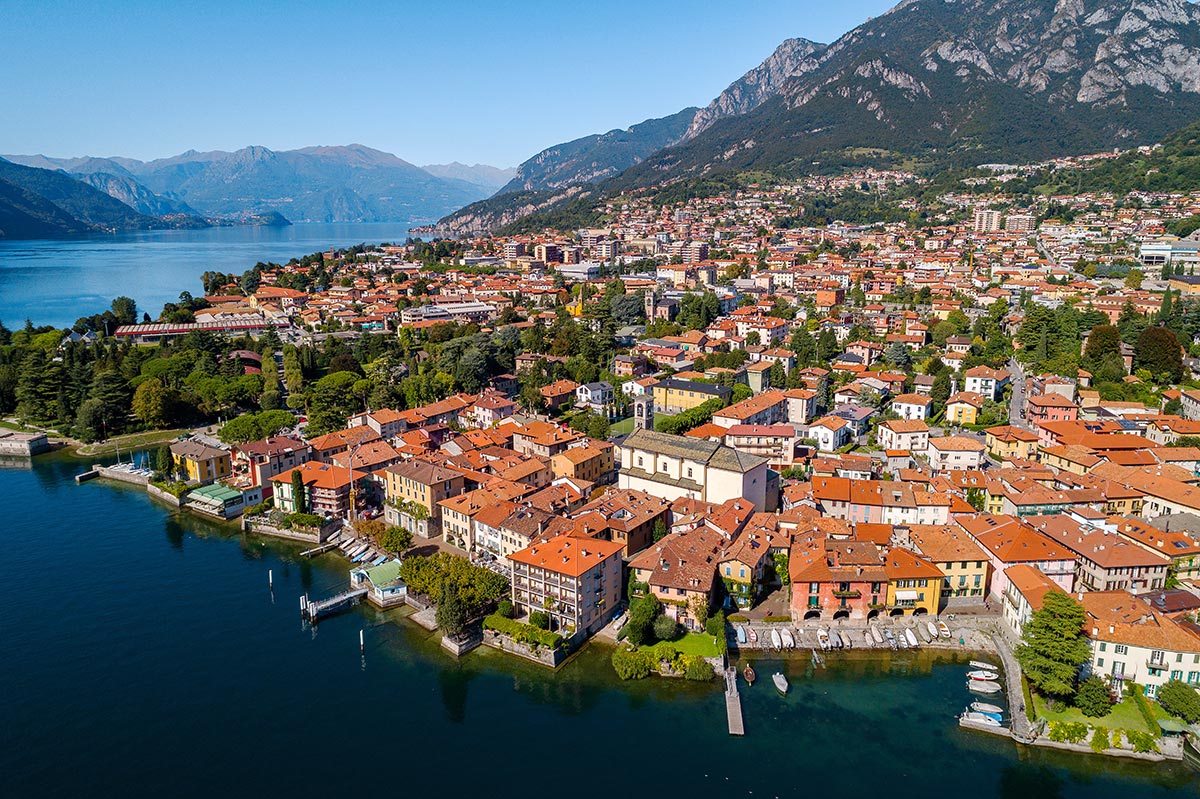
A seemingly operational hotel and restaurant is being offered through a judicial sale with a €1.402 million base price and a €1.052 million minimum bid. But the real question is not the price per key: it is how much value sits within the real estate, the F&B operation and the going concern
A ten-room hotel can be worth more for its restaurant than for its guestrooms.
That is probably the first point to consider when analysing Albergo Ristorante Grigna in Mandello del Lario, on Lake Como.
The property, located at Strada Statale 72, nos. 29/31, is subject to enforcement proceedings no. 65/2025 before the Court of Lecco.
The sale is scheduled for 4 November 2026.
The base price is €1,402,600, while the minimum admissible bid is €1,051,950.
The proceedings concern a property used as a hotel, restaurant and bar, comprising ten guestrooms, a professional kitchen, a dedicated pizza-oven area, reception, outdoor areas, a garage and ancillary spaces.
At first sight, the arithmetic appears straightforward:
approximately €140,000 per room at the base price
and
approximately €105,000 per room at the minimum bid.
But that is probably the least useful way to assess the opportunity.
Grigna is not simply a hotel.
It is a hybrid hospitality asset in which accommodation, restaurant, pizzeria, bar and local demand coexist within the same economic model.
And this combination is precisely what makes the opportunity particularly relevant for InvestimentiAlberghieri.it.
Ten rooms, approximately 150 covers
The Municipality of Mandello del Lario lists Albergo Ristorante Grigna as an accommodation and restaurant business with capacity for approximately 150 covers.
Major booking platforms also continue to list the property as a three-star hotel with a restaurant and bar.
These elements suggest that there is still an active commercial presence.
They do not, however, automatically establish:
-
who currently operates the business;
-
under what legal arrangement;
-
whether the operator is the same entity as the debtor owning the property;
-
which movable assets belong to the operating business;
-
which licences and permits may be transferred;
-
whether the existing goodwill would survive a transfer of the real estate.
This is where the investment case becomes more complex.
The question is no longer simply:
“How much does the hotel cost?”
It becomes:
“What am I actually acquiring?”
The real estate asset
The documentation relating to the proceedings describes a stand-alone building arranged over several levels.
Basement level
Service areas, storage space and a separate tavern-style room.
Ground floor
-
restaurant;
-
dining room;
-
bar;
-
kitchen;
-
pizza-oven area;
-
restrooms;
-
reception;
-
ancillary rooms;
-
garage;
-
external areas also capable of supporting food and beverage use.
First floor
Five guestrooms with private bathrooms, together with a balcony and terrace.
Second floor
A further five guestrooms with private bathrooms.
Attic level
An additional unit which, according to the published documentation, does not meet the requirements for residential occupancy.
Marketing material relating to the proceedings also refers to landscape protection restrictions and a tourism-accommodation use designation, both of which should be verified directly against the official planning and legal documentation.
The real estate and the operating business are not the same thing
This is the central issue in the transaction.
Acquiring the property does not automatically mean acquiring:
-
the hotel operating business;
-
the restaurant operation;
-
the trading name;
-
the brand;
-
employees;
-
forward bookings;
-
OTA profiles;
-
the customer database;
-
commercial contracts;
-
operating licences;
-
equipment excluded from the property sale;
-
the goodwill attached to the restaurant.
This distinction is critical.
An investor may acquire the real estate without acquiring the going concern that historically generated the revenue.
Likewise, an investor may acquire a seemingly operational property without having any certainty that historical EBITDA will transfer with the asset.
This is the same principle that underpins the analysis undertaken by Investhotel.it, where the following elements must always be assessed separately:
real estate + operating business + licences and permits + FF&E + management.
If these elements belong to different parties, the acquisition price of the building tells only part of the story.
€105,000 per room may be a misleading metric
Dividing the minimum bid by ten guestrooms produces a figure of approximately €105,000 per key.
But that number also includes:
-
restaurant space;
-
pizzeria;
-
bar;
-
kitchen;
-
outdoor areas;
-
reception;
-
garage;
-
ancillary accommodation.
Furthermore, restaurant capacity of approximately 150 covers fundamentally changes the economic importance of the food and beverage operation.
Grigna should therefore be analysed through at least two separate business units.
Rooms
To be assessed through:
-
ADR;
-
occupancy;
-
RevPAR;
-
rooms revenue;
-
direct operating costs;
-
operating margin.
Food & Beverage
To be assessed through:
-
annual covers;
-
average spend per cover;
-
food cost;
-
beverage cost;
-
labour cost;
-
opening days;
-
share of in-house guests;
-
share of external customers;
-
F&B EBITDA.
Only then does it make sense to consolidate the two businesses.
The restaurant may be where the real value lies
Ten guestrooms inevitably place a limit on the property’s room-revenue potential.
The restaurant, by contrast, can address a much broader market.
With theoretical capacity of approximately 150 covers, the F&B business cannot reasonably depend solely on hotel guests.
Its economic model therefore requires a meaningful level of external demand.
Before assessing the asset’s value, an investor would need to understand:
How much revenue does the restaurant generate?
How many annual covers does it serve?
What is the average spend per customer?
How much revenue comes from local demand?
How significant is seasonality?
What are the food and labour cost ratios?
Does the restaurant generate EBITDA, or does it dilute the margins generated by the rooms business?
These are fundamental questions.
The risk would be to acquire a property that appears inexpensive on a price-per-key basis without recognising that its economic equilibrium depends on a substantially more complex F&B operation.
Existing reputation creates scope for a turnaround
The property’s current online presence offers another relevant data point.
The hotel has accumulated hundreds of reviews, although its overall rating is not particularly strong.
This can be viewed as a weakness.
But it may also indicate repositioning potential.
Refurbishing guestrooms and bathrooms, improving the guest journey, revisiting distribution strategy and developing a stronger F&B concept could create additional value.
But only if the increase in prospective cash flows justifies the capital required.
A turnaround does not create value simply because a hotel has been refurbished.
Value is created when:
increase in prospective value > CAPEX + disruption costs + execution risk.
This is one of the fundamental principles underpinning the turnaround and asset-management work carried out by HotelManagementGroup.it.
Location alone is not enough
Mandello del Lario benefits from Lake Como tourism demand and occupies an attractive position for both leisure travellers and transient traffic.
But a strong location does not automatically make an investment attractive.
An investor still needs to assess:
-
seasonality;
-
market ADR;
-
occupancy;
-
competitive set;
-
international demand;
-
accessibility;
-
parking;
-
competition from short-term rentals;
-
local F&B demand;
-
season length;
-
potential for extending demand beyond peak months.
Location creates potential.
Management determines how much of that potential becomes EBITDA.
The tourism-use restriction makes the business plan even more important
If the tourism-accommodation use restriction referred to in the documentation is confirmed in the terms currently reported, an investor may have less flexibility to pursue a rapid conversion to alternative uses.
The asset would therefore need to justify its value primarily through its ability to operate successfully as a hospitality property.
This makes a realistic business plan even more important.
It is not enough to say:
“It is on Lake Como.”
An investor must demonstrate:
how much revenue the property can generate, at what cost structure and with how much invested capital.
Due diligence should begin with the operator
Before focusing on the bricks and mortar, an investor needs to establish who currently operates Grigna and under what legal basis.
At a minimum, due diligence should address ten areas.
1. Ownership
Legal title to the property, mortgages, encumbrances and the exact scope of the enforcement proceedings.
2. Occupancy
Who currently occupies and uses the property, and under which contractual arrangement?
3. Hotel operating business
Is there a separate operating business? Who owns it?
4. Restaurant
Does the F&B operation belong to the same entity operating the guestrooms?
5. Licences and permits
CIN registration, SCIA, hotel classification, food and beverage permits, fire-safety compliance and health authorisations.
6. FF&E
Which furnishings, kitchen equipment and movable assets are actually included in the acquisition?
7. Employees
Headcount, labour costs, seniority and continuity of employment relationships.
8. Performance
ADR, occupancy, RevPAR, rooms revenue, F&B revenue and normalised EBITDA.
9. CAPEX
Guestrooms, bathrooms, building systems, kitchen, common areas and compliance expenditure.
10. Going concern
The final question:
How much of the existing economic activity will genuinely survive the transfer of the real estate?
This is where the quality of the investment is determined.
Two fundamentally different investment scenarios
The opportunity should be modelled under at least two scenarios.
Scenario 1 — Continuity
The investor acquires the property and is able, either directly or through an agreement with the existing operator, to preserve a significant part of the going concern.
The following may therefore be retained:
-
employees;
-
customer base;
-
distribution;
-
reviews;
-
restaurant operations;
-
commercial relationships;
-
operating continuity.
Under this scenario, part of the existing goodwill may survive the transaction.
Scenario 2 — Restart
The investor acquires the real estate only.
It may then be necessary to:
-
establish or appoint a new operating company;
-
obtain or transfer licences;
-
recruit employees;
-
rebuild distribution;
-
reposition the restaurant;
-
undertake CAPEX;
-
fund pre-opening costs;
-
provide working capital.
Under this scenario, the sustainable acquisition price for the property must necessarily be lower.
Because the judicial-sale price represents only one component of the total capital requirement.
From purchase price to Total Investment Cost
The figure that really matters is not:
€1,051,950 minimum bid.
It is:
**acquisition price
-
taxes and transaction costs
-
CAPEX
-
FF&E
-
professional fees
-
legal costs
-
pre-opening expenditure
-
working capital
-
financing costs
= Total Investment Cost**
Only then should the investment be assessed against:
stabilised EBITDA / Total Investment Cost.
Together with terminal value and execution risk, this ratio determines the financial quality of the transaction.
At Robertonecci.it, this principle is frequently applied to hospitality investment analysis: an attractive entry price means little if the total capital required to bring the asset to stabilised operations destroys the expected return.
Is Grigna a hotel, or a restaurant with rooms?
This may be the most important question in the entire investment case.
Formally, it is both.
Economically, that still needs to be established.
Ten guestrooms and approximately 150 restaurant covers suggest a highly unusual relationship between lodging and food and beverage.
Before assigning a value to the opportunity, an investor must therefore establish where EBITDA is actually generated.
If the restaurant is the primary economic engine, the investor is effectively acquiring an F&B-led business with an accommodation component.
If, on the other hand, the guestrooms generate strong margins and the restaurant primarily supports the lodging business, the economics are entirely different.
The answer will not come from the room count.
It will come from the P&L.
The real risk is not simply overpaying for the real estate
Albergo Ristorante Grigna is interesting because it forces an investor to separate at least four distinct values:
real estate value
hotel operating value
restaurant operating value
going-concern value
The judicial-sale price represents only the first.
Everything else must be reconstructed.
And that is where the real transaction risk lies.
The real risk is not simply paying too much for the property.
It is assigning value to historical EBITDA that may not transfer with the asset.
If the going concern does not follow the real estate, applying a multiple to past earnings becomes largely meaningless.
An investor therefore needs to ask not only how much Grigna costs today.
The real questions are:
How much of the existing business will survive the transfer? How much capital will be required to preserve or rebuild it? And what EBITDA can the asset generate once a new operating structure has stabilised?
Only then can price and value be meaningfully compared.
CTA
Hospitality investment analysis, assets for sale, special situations and distressed opportunities
InvestimentiAlberghieri.it analyses hotels, hospitality properties and special situations through an integrated assessment of real estate, operating businesses, performance, management, CAPEX requirements and value-creation potential.
For confidential enquiries and analysis:
info@investimentialberghieri.it